Why it’s time to drop the BBC licence fee.
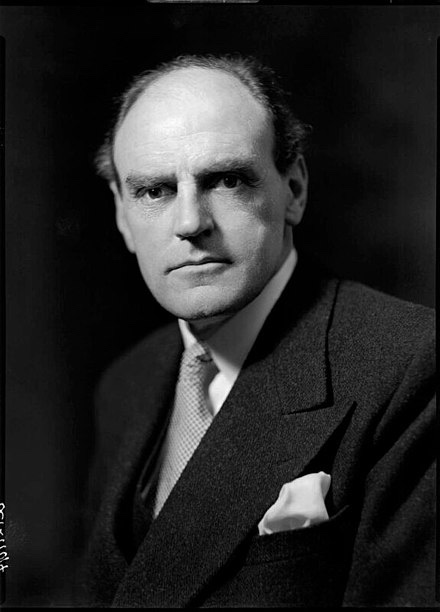
When the BBC started in 1922 it was actually a limited company. It didn’t get its royal charter until five years later, when it became a public corporation, which it still is. The head of both organisations was John (later Lord) Reith, a famously stern Presbyterian who guided the BBC through until until 1938, by which time the tone was set.
What was interesting about the early funding of the BBC was that it came from a tax on the newly invented wireless receiver. This later became the radio licence and subsequently the TV licence.
There has been a huge amount of discussion in recent years about the way that the BBC is funded via a licence fee. I’m fiercely defensive of the Beeb not least because most of its detractors are in my view motivated by a desire to undermine our democracy and the quality of our public life by destroying what balance and intelligence remains in the British media. But I am also beginning to come to the conclusion that the TV licence is a thing of the past and needs to be replaced by something better, less contentious to collect, and more flexible in a world dominated by social media.
Let’s begin by looking at who is lobbing what missiles at the BBC, and by realising what an impossible task it has in this day and age to stay at the centreground of our culture without fossilising. It is a fact of political life that everyone thinks the BBC is on someone else’s side. At the extremes it is regarded by the far left as an instrument of fascist state oppression and by the far right as an institution dominated by woke liberals who want to force us all to eat tofu and change gender. Nearer the centre it is regarded as biased and dangerously woke by the tories and biased and dangerously small c conservative by Labour. It is increasingly viewed as inept and unstable and seems unsure of its role.
A bigger threat however is that the section of the public that values it tends to be older. Young people watch streaming services rather than television, or look elsewhere to interactive platforms such as tiktok and instagram for their entertainment; but more importantly they are turning their backs on the news completely because (according to researchers) it has a negative impact on their mental health and / or they don’t trust it to be honest.
What has any of this to do with the BBC and how it is funded? Well the answer is that the funding model, i.e. the licence fee, was a way of ensuring high quality public broadcasting. But we don’t do broadcasting anymore. The vary word implies scattering whereas people increasingly want information and entertainment in a variety of flexible formats, individually tailored to their interests, across a range of devices. An analogy from the past is when a broadsheet was posted up in a town square for you to read, compared to a time when you had a choice of newspapers and a huge range of books available through the new public libraries. Diversity and choice always usher in something new.
The BBC’S self stated aim is “to enrich people’s lives with programmes and services that inform, educate and entertain”. This is fine as far as it goes but it is uninspiring. A publicly funded sector of the media should also seek to challenge and offer something different at a time when the world is facing so many existential threats, not least from the changing nature of media itself. So to begin with the BBC needs to redefine its core ambitions.
But on the matter of funding, the best way to finance the BBC is by linking it directly to the overall growth and change in the communications world itself. Everyone uses devices, either smartphones, tablets, computers. Televisions or DAB radios. What is more they tend to change and upgrade them according to a fairly predictable cycle. A tax levied directly on the sale of these specific items – either a hypothecated tax or a slight variation in the rate of VAT- would be a viable alternative to the current licence. To give the BBC stability it could receive a three year rolling settlement from the government that was enshrined in law. This would enable it to plan ahead based on predictable sales of devices that were capable of receiving its content. Richer people, with more and bigger devices, would pay more so it would be a progressive tax as well.
At the moment there is a genuine problem with the licence fee. It is unhelpfully visible, contentious, and a political football. Enforcement is difficult and at the sharp end it is outsourced to a private company (Capita) who chase those who don’t pay. None of this is helpful to the BBC or its reputation. Public sector media needs genuinely independent, well resourced, and free to focus on quality and offering something different compared to the likes of Netflix, Disney and TikTok. And that has to start with the way it is funded. Perhaps going back to the Reith model of taxing the device rather than the individual is a better way of doing this in future.
 Eyecatching