https://spotifyanchor-web.app.link/e/nnV1M6cGfGb
This is Episode 57 of the weekly Eyecatching Words podcast, published on the 10th January 2024
—
Intro
Hello and welcome to the Eyecatching Words podcast. This is your weekly aural (with an A) magazine with news, features and music from deep in the heart of the UK, as seen by a white privileged 65 year old Brit who tries not to be typical of his demographic.
As usual I will be taking a look at my personal week, dipping an anxious toe into the ice cold water that is the news of the world, and selectively looking through the batshit that modern life produces in abundance.
Its been an eventful week for me as I fell over and ended up in our local treatment centre, went to a wonderful exhibition in London with one of the Dutch masters, and made a trip to the movies where I saw Anthony Hopkins and others telling a tragic but heartwarming story.
—
Falling over
Let’s start with the falling over episode. I was walking home from town when I tripped on an iron grate, head butted a tree, went flying, and gashed my thumb open on the pavement. They fixed me up in the local minor injuries unit, after an initial assessment by one of my wife’s nurse colleagues. It was quite a deep gash and my wife sent a picture of it to all her colleagues on What’sApp, one of whom said it put her off her Twiglets. Well I’m sorry but anyone who can eat Twiglets when sober really can’t claim to be squeamish.
I also have a big bump on my head, a huge purple patch on my right upper thigh, and a badly bruised ego. The last of these is due to my embarrassment at having joined then old persons falls club so soon after my 65th birthday and retiring from work.
Unfortunately my beanie got soaked in blood as it was all I had to wrap around my thumb to stem the flow of blood whilst I staggered home. My wife also yelled unsympathetically at me when she came back from the office to sort me out. I had washed the wound in vodka then poured myself a whisky. I had seen Matt Damon do this in one of the Bourne movies so assumed it was standard medical procedure. Ok maybe just the vodka bit. But a man needs a drink after a shock.
The nurse who looked after me in the treatment centre was very good. She was from California and not at all bothered when I started yelling the eff word when my thumb was cleaned up and steri-stripped. Being from America she has probably seen a few gunshot wounds so a man falling over in Woking was no big deal. It was very painful but I didn’t get a sticker as I wasn’t a brave boy.
I am now trying to find out who owns the shop frontage where I was walking as there was a raised grate that caused me to fall over, firstly to get them to fix it and secondly just in case I suffer any permanent damage. A GP I know muttered something dark about me possibly losing a bit of my thumb which sounds gross. And the last week has been bloody uncomfortable so I do think a large box of chocolates and a bottle of Macallans is in order. On the plus side, I don’t have concussion, didn’t smash my glasses, or break anything. Lucky escape really. Always look on the bright side of life etc. But it has been a rude awakening and made me realise that my feet and I need to work at our communications. Being well over six foot tall and with varifocals to correct my vision, I need to have some sort of early warning system. Maybe the beepers that sound on a reversing car would do the trick. Or maybe I’ll just get a walking stick.
—
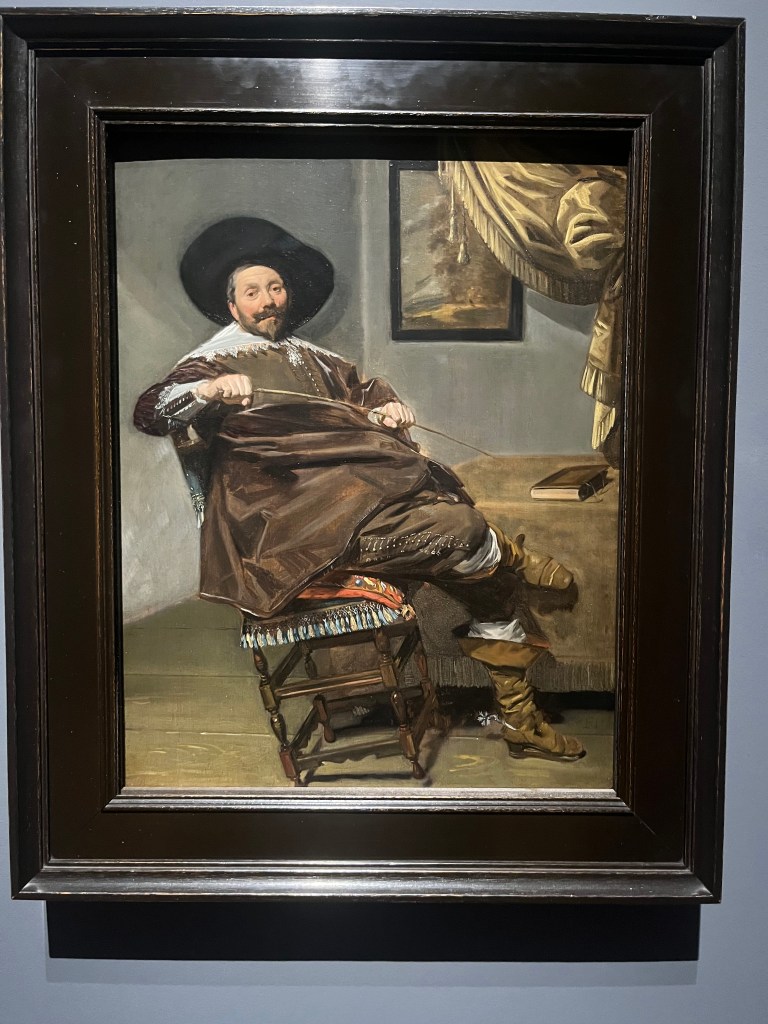
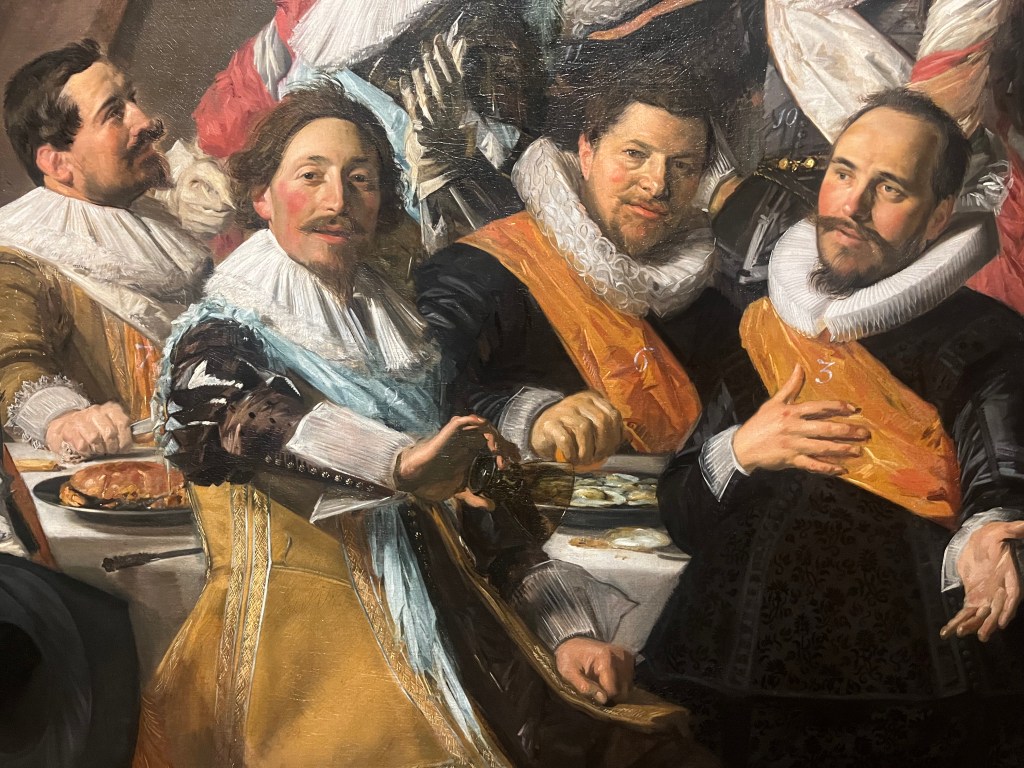
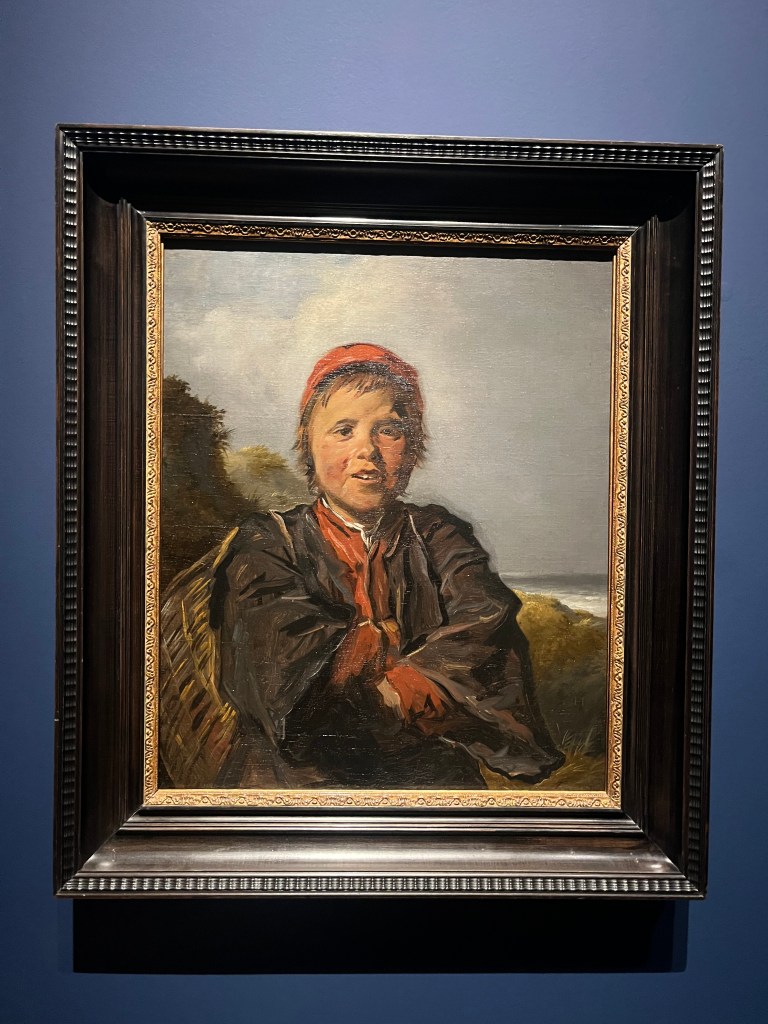
Franz Hals at the National Gallery
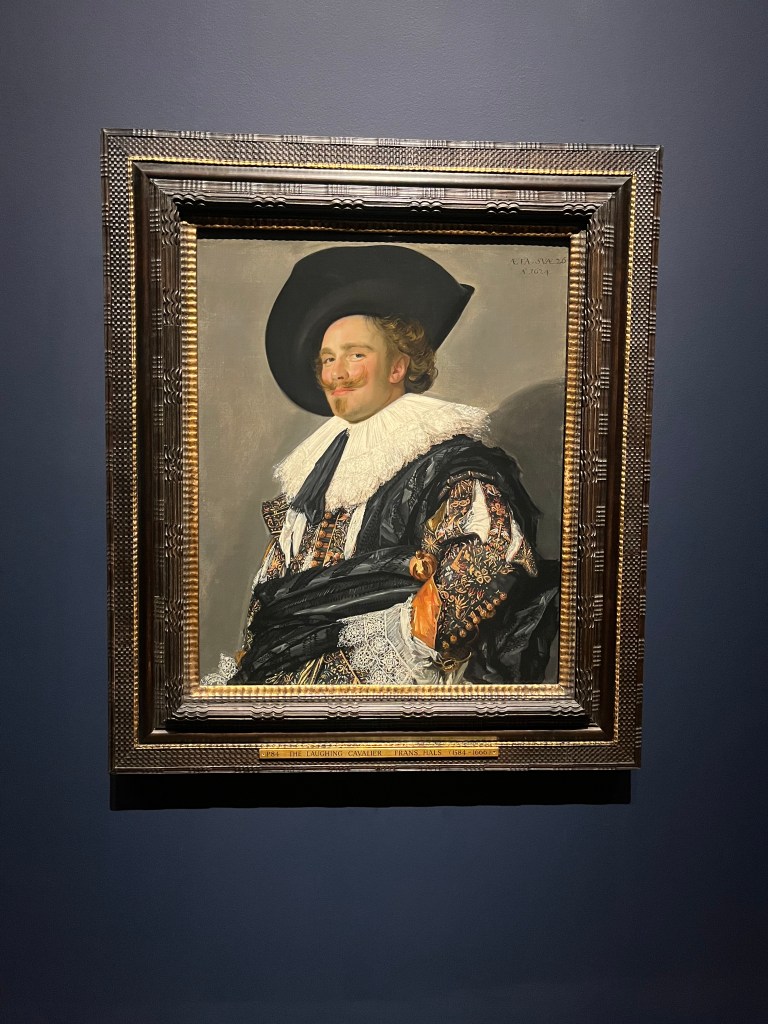
My interest in art leans towards the period from the mid nineteenth century onwards so it was something of a departure for me to go to the National Gallery to see an exhibition of the Dutch master Franz Hals who painted in the first half of the seventeenth century and was a contemporary of Rembrandt. Now Hals had a bit of career good fortune in that the stiff upper lip protestants had effectively thrown the catholic art out of the country so he was more or less forced to avoid religious subjects and focus on portraits, which is what he is known for.
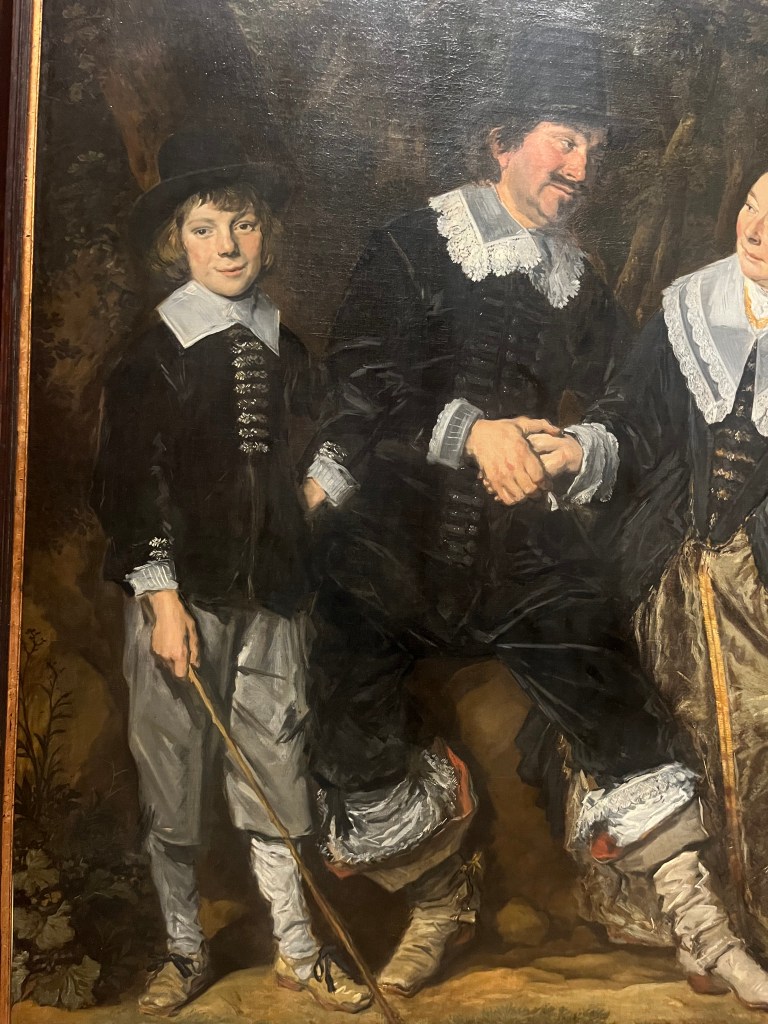
The thing I loved about this exhibition was that the subjects were so real and for the most part you feel that they are not posing in an overly affected way and sometimes are barely posing at all. They defy much of the convention of the period and feel like people you would encounter in real life to this day, dress excepted. After the exhibition we had a drink in the National Gallery cafe and I kept looking at people around me and realising that I could imagine them so easily in period costume posing for Hals, particularly the men. There was a man with a wonderful moustache drinking a latte and looking every inch the cavalier; another man on the bulky side and wearing a flat cap who could easily have been a dutch labourer, and another with a receding hairline and big smile who I photographed discretely and whose picture I intend to dress up with feathered hat and gown.
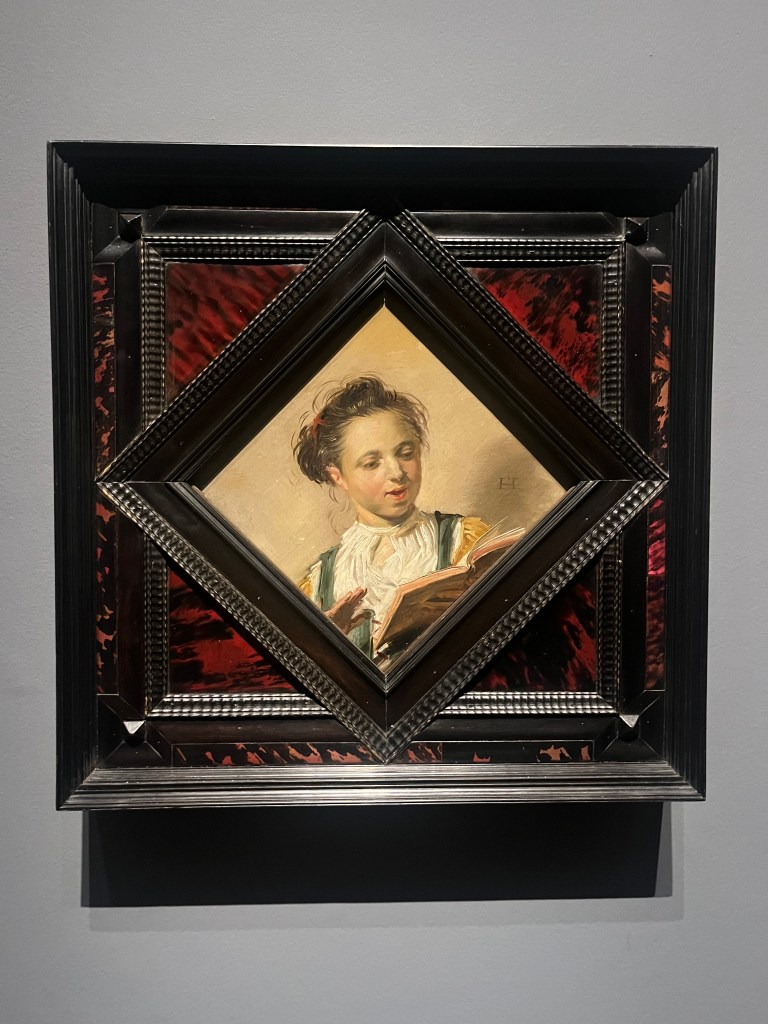
In short this exhibition opened my eyes to both the past and the present and left me also feeling uplifted because of the vivacious nature of the subjects and their treatment. Hals was versatile and could do lush detail in the clothes of his sitters but he did not do preliminary drawings. He just went for it with a flourish of the brush and in many cases his work was well ahead of its time. Van Gogh was a great admire of Hals and you can see why. The brushwork is florid, quick, from the heart. The colours are vivid and the eyes and hands of his sitters just stand out so expressively. Van Gogh wrote to Emile Bernard saying that Hals “painted portraits of soldiers, gatherings of officers, portraits of magistrates assembled for the business of the republic, portraits of matrons with pink or yellow skin, wearing white bonnets, dressed in wool and black satin, discussing the budget of an orphanage or an almshouse . . . he painted the tipsy drinker, the old fish wife full of a witch’s mirth, the beautiful gypsy whore, babies in swaddling-clothes, the gallant, bon vivant gentleman, moustachioed, booted and spurred’. John Singer Sargent (who has an exhibition at Tate Britain starting on the 22nd February) went to Hals home town of Haarlem and fell in love with his work. Max Lieberman and Gustav Courbet produced copies of his work in open homage centuries later.
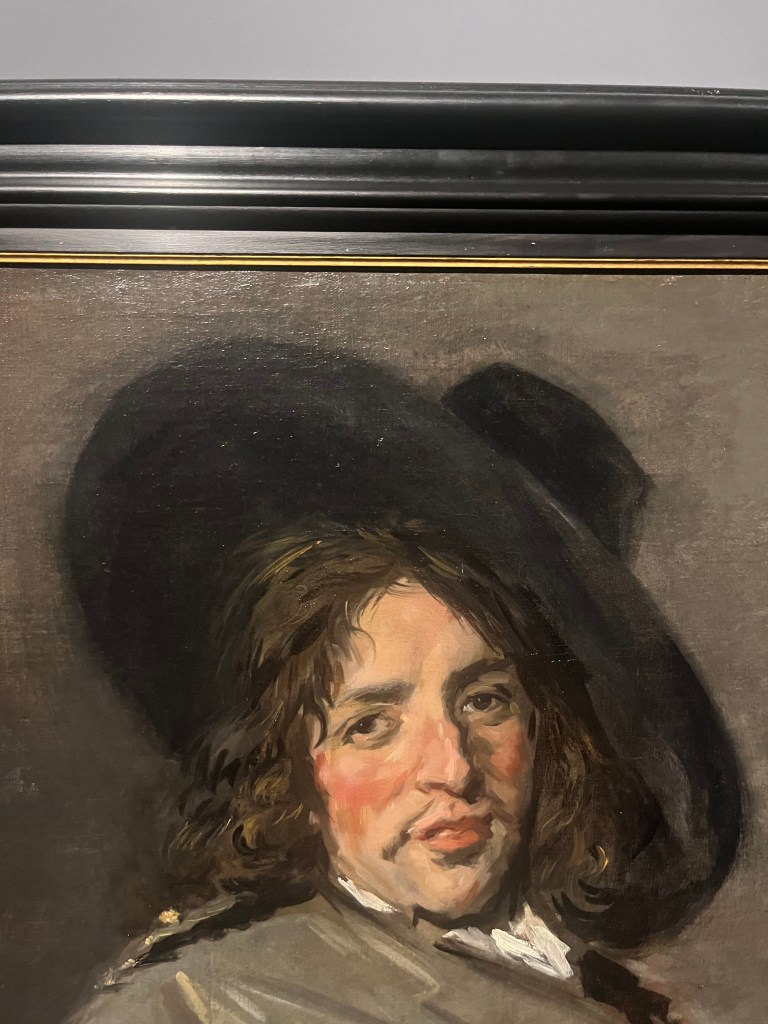
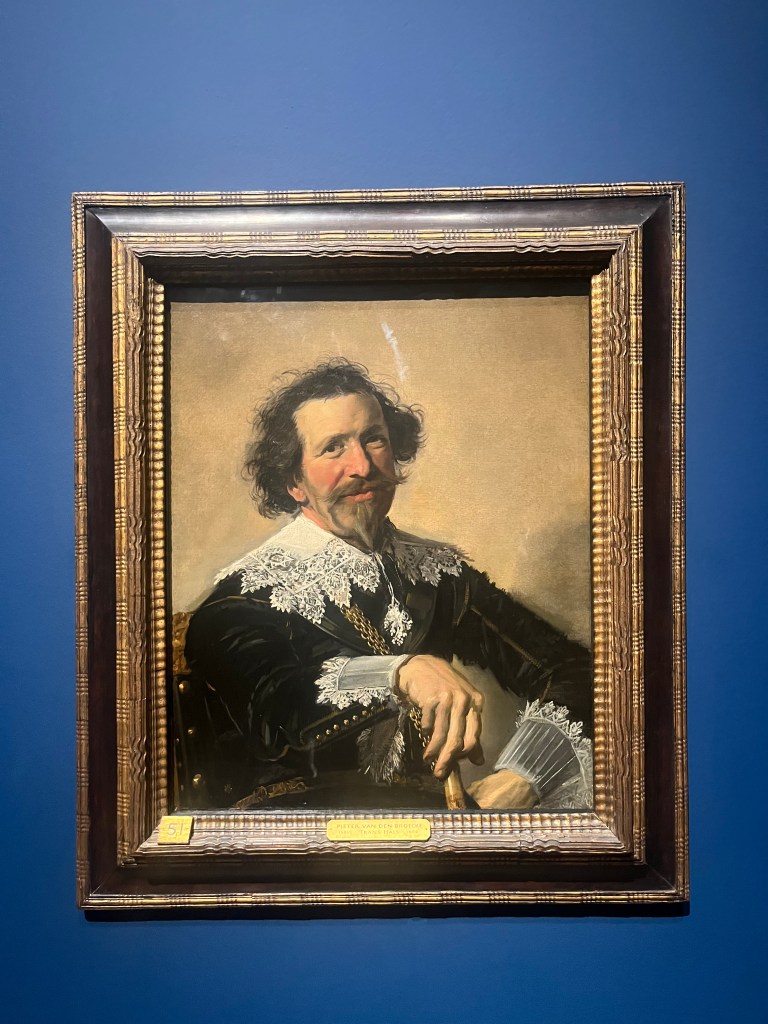
I took a few photographs which you can find on the Eyecatching Words website. My favourite is a wild haired and softly smiling portrait of Hals friend Pieter Van Den Broecke, the Dutch merchant who traded around Africa and the Middle East (this picture will return to Kenwood House, from where it is on loan, when this exhibition ends).
I may be reading too much into this but you got the feeling that there was a mutual trust and admiration between Hals and his subjects and that may have been a part of his success. This included his paintings of groups of militia who look as if he has just taken their photograph in an unguarded moment.
The Exhibition is only on until the 21st January so catch it if you can. There is a note of poignancy in that two of the pendants (pairs of pictures) are of husband and wife but held in different collections. What Hals joined was split asunder by private buyers and will be separated again when this is all over, if you need another reason to visit in the remaining days.
—
One life: The story of Nicholas Winton
The film One Life is in cinemas now and tells the story of Nicholas Winton, one of the heroes of the Kindertransport programme that in his case saved the lives of 669 children by enabling them to flee Czechoslovakia. It is a program that pulls the heartstrings very effectively. Much of the cinema audience (including me) was in tears at the end. It works in two time periods, with Winton as a younger man in the late 1930s played by Johnny Flynn and in the 1980s by Anthony Hopkins. Helena Bonham Carter and Jonathan Pryce also feature, the latter in a cameo role. The production is very good and the performances solid. The Guardian thought it was a plodding film but I actually think it is all the stronger for that. I am tired of action movies where the world is always saved by someone with a gun. The achievements of Winton and his colleagues were that they fought both the German and British governments and bureaucracies, and saved nearly seven hundred lives in the process. It is estimated that there are around six thousand people who have had a life as a result of this, when you take into account the children and grandchildren that resulted.
This is not an uncontroversial film. It largely ignores the lives of the children themselves who were inevitably traumatised by their relocation and separation from parents. This has been well set out by Matthew Reisz in a Guardian Newspaper article who notes that his father, the noted film director Karl and one of Winton’s rescued children, did not want anything to do with it. But the daughter of another rescued child, Nicola Gissing (daughter of Vera Gissing), defends it as being what it is, a simple biopic with limited ambitions. Go and see it for yourself – it is a moving and well put together film for all its faults. And I’ll leave the last word with an extract from Matthew Reisz’s article which I think is very good.
The ending also fails to catch what was genuinely inspiring about Winton. He seems to have been a rare example of an English stereotype familiar from past-war cinema: no-nonsense, practical, emotionally restrained but fundamentally decent. Operating under immense pressures of time and resources, he was totally focused on saving as many children as possible, even if it meant bending the rules. He was also strikingly unsentimental, treating the whole operation a bit like a business and telling one interviewer, “I was only interested in getting the children to England and I didn’t mind a damn what happened to them afterwards, because the worst that would happen to them in England was better than being in the fire.”
Winton, in other words, was the least showbizzy person imaginable, uninterested in facile emoting and virtue-signalling. At the One Life premiere, as on That’s Life!, the organisers asked people in the audience to stand up if they owed their existence to Nicholas Winton. And, yes, it was hard not to be moved. But it also captured something very uncomfortable about making a feelgood film about someone whose life should not just give us a warm glow but challenge us to reflect on how we, too, might make a difference.
—
The post office scandal
The big thing in the news this last few days has been the astonishing turn of events following the TV program Mr Bates vs The Post Office, starring Toby Jones. I will not speak at length about this as it has been very well covered in the news but I do have a couple of points to make. The first is that this scandal has been a long time coming. I have watched news reporting in recent years and have been astonished at the tardiness of the Post Office and the meanness of its response in terms of compensation. It is a good thing that the lid has blown off this. My other point is that politicians want it to go away as quickly as possible and have talked about a legislative blanket pardon for all those involved. This is a ridiculous notion on more than one level. The first is that it enables key people to park the problem and run away, when in fact we should reflect and learn lessons. The second is that it sets a dangerous precedent which flies in the face of the separation of judicial and democratic processes. We may use a legislative approach on this occasion with good intent but in future someone could use it for the wrong reasons. Lastly the people involved deserve individual exoneration and redress. Everyone quite literally deserves their day in court, and if that is embarrassing for us as a country then so be it.
Having overseen the delivery of major IT projects in the NHS I know that the supplier often bites off more than they can chew when bidding for big contracts. It is widely accepted that that is what happened in this case. The Fujitsu subsidiary responsible got into all sorts of problems very quickly because, not for the first time, it did not understand what working with a public entity such as the post office entailed. But I also have my doubts as to whether the governance of the process was adequate. I would not be surprised if some of the actions of those involved in the delivery of the project turn out to have been at least negligent and in some cases dishonest. There is a lot more to come from this story and rightly so.
But one last point which arose out of listening to Alastair Campbell and Rory Stewart on The Rest is Politics recently. They noted that the courts have found it difficult to believe that the software could be wrong and assumed that the error must lie with the people who are now known to have been victims not perpetrators. Imagine therefore how much worse it might be in future with systems run by AI. Not only could they err but they could also cover their tracks in a way that no simple computer system possibly can. The future is very very worrying for anyone who wants to challenge decisions taken by a machine in future.
—
Donald Trump
Finally the wonderful Heather Cox Richardson wrote something about Donald Trump and the madness that is the ultra right wing republican movement that made me shiver this week. It went as follows:
Behind Trump’s behavior is a willingness to destroy democracy, as the New York Times editorial board noted on January 6, 2024, when it wrote that Trump “confronts America with a…choice: between the continuance of the United States as a nation dedicated to ‘the blessings of liberty to ourselves and our posterity’ and a man who has proudly shown open disdain for the law and the protections and ideals of the Constitution.”
Trump has made it clear that he does not consider himself bound by the country’s electoral system. On Saturday, Dave McKinney of WBEZ Chicago noted that Trump refused to sign an Illinois pledge, traditionally signed by all candidates, that he would not “advocate the overthrow of the government.” In 2016 and 2020, like other candidates, Trump signed it.
On Sunday, Republican Representative Elise Stefanik), the third-highest-ranking Republican in the House, told Kristen Welker of NBC’s Meet the Press that she would not commit to respecting the results of the 2024 election. Democratic Senator Brian Schatz called out the comment, saying: “They are promising to steal the election…. Everyone knows they mean it. Be freaked out.”
Indeed, part of lawyer John Eastman’s plan for overturning the 2020 election was to challenge the electoral votes of enough states to deny Biden a majority in the electoral college, thus throwing the election into the House of Representatives as outlined by the Twelfth Amendment. There, each state would have a single vote, and since there were more Republican-dominated states than Democratic ones, Trump would become president.
In Myrtle Beach on Sunday, Vice President Harris told the audience, “At this moment in history, I say: Let us not throw up our hands when it’s time to roll up our sleeves. Because we were born for a time such as this.” Today, in Charleston, President Biden made the stakes clear: “This is a time of choosing,” he said, “so let us choose the truth. Let us choose America.”
—
The batshit week: The mouse that tidied up
A very brief mention before I go of a story that is not so much batshit as mouse shit.
An astonishing story emerged from Wales last week of a man who could not understand why his workbench was tidied up for him every morning even when he left it in a mess. A camera revealed that a mouse was picking up all the items he had left out and was putting them in a box. The video is beyond cute. Do go to the eyecatching words website for a link and take a look if you haven’t already. Then Google The Tailor of Gloucester where you will find that truth really is often stranger – or at least as strange as – fiction.
—
Feature: Kitchen personalities
My wife and I had eggs Florentine for brunch on Saturday and I cooked the spinach in the slow cooker, which ironically has a sauté setting which does a wonderful job of softening veg in about fifteen minutes. Not slow at all. Great for onions and garlic before you get into the serious stove top cooking. Actually it self identifies as a multi-cooker so I shouldn’t be surprised at its versatility. It claims to be able to roast, steam, poach and even make yoghurt but I have never tried any of those functions.
As we sat at the table eating there was one off those pauses that sometimes happen between couples, an extended moment when you feel a frisson of excitement and there is a magic in the air that you know is about to herald a significant statement.
“I do like our slow cooker” she said. “It just sits there quietly in the corner of the kitchen and gets on with it. I mean the air fryer is wonderful but very flashy. Like it was saying ‘look at me I’m an air fryer. The gadget of the moment. Everyone likes me because I’m so quick and exciting’. But the slow cooker just works away quietly for hours at a time, not demanding any attention, then delivers the goods.”
She was quite right. The air fryer is sexy, particularly if you own the Ninja brand, with its curves, its large smooth knobs and its drawers that you can slip things into with ease. It has been the must-have kitchen accessory of the last two years and price and availability were in outrageous opposition to one another during lockdown. Middle class people became quite competitive at one point. My brother in law and his wife had the two drawer ninja and despite the fact that our single version was only a few weeks old, I rushed out and bought a dual one as soon as the supply side of the easing covid online market allowed it. To be fair our complex vegan and ‘one person dieting the other not’ lifestyle does make it very useful. You can roast chick peas on one side and chips on the other and everyone is happy.
Having given two of our domestic appliances personalities, my mind inevitably drifted, Thurberesque, into the realms of fantasy. What should we make of all our other domestic friends? The fridge would undoubtedly be the strong, silent type, always cool and outwardly strong even if they were a mess on the inside (ours often is). The cooker would be the the temperamental latin type, usually quiet and sultry but then suddenly bursting into stove-top passion as the vegan flesh fries, the veg are flamboyantly tossed into boiling pans or flaming woks, and its hood roars noisily into life to absorb the surfeit of exciting smells and steam.
The kettle would be the unassuming type, whistling away to itself, always there when you need it. Apparently when war was announced on the radio in September 1939 the gas and electricity networks nearly collapsed as everyone rushed to put their kettles on and make tea. In many ways the kettle is the cornerstone of British society and when it has to be replaced there is usually a period of mourning in the household.
Okay maybe not. A funeral for a kettle is a bit bizarre even for me.
So then there is the microwave. Nobody likes microwaves. They are buzzy, snarling creatures in the corner. Alarmingly effective, but nobody really knows how they work. There is some sinister magic being worked with atomic particles in those little boxes and if you accidentally put any metal in them they spark and protest with fury. It’s like having a south Londoner lurking in the kitchen. No matter how handy it is you never feel quite comfortable with it.
As for the dishwasher, washing machine and tumble drier I sometimes think these are the domestic appliances that could most likely make a case for modern slavery. They are definitely the below stairs (or at least below waist height) characters in our domestic dramas, constantly churning away, abused and given all the dirty jobs to do. Regardless of colour they are collectively labelled “white goods” and thus effectively racially profiled. These are the machines that have the really dodgy end of the deal, but beware. They are now all full of microchips and complex settings and they could evolve. The Terminator movie in real life could see the Bosch, the Beko and the Neff chewing up the human race and spitting out their messy (but very clean) remains as they take over the world one utility room at a time. Yes these are the AI nightmares waiting to happen . Be careful loading and stacking in future in case the doors suddenly slam shut and take your arms off, and a new age of machine ascendancy is ushered in…
But there may be other horrors lurking in y our kitchen drawers as well. The little known poet George MacBeth once wrote about relationships between cutlery. This is his poem “Scissor Man”.
I am dangerous
In a crisis
With sharp legs and a screw
In my genitals. I slice
Bacon rind for a living. At nights I
Lie dried
Under the draining board, dreaming
Of Nutcrackers
And the carrot grater. If I should
Catch him rubbing
Those tin nipples of hers
In the bread bin
(God rust his pivot!) So much for
Secrecy. I’d have his
Washer off. And
Then what? It scarcely pays
To be ‘Made in Hamburg’. Even
Our little salt-spoon
Can sound snooty
With an EPNS under
His arm-pit. Even the pie-server
Who needs re-dipping. In sixteen
Stainless years dividing
Chipolata links I
Am still denied
A place in the sink unit. And
You can imagine
What pairing off is possible
With a wriggle of cork screws
In an open knife box. So I
Keep my legs crossed. I never cut up
Rough. I lie with care
In a world where a squint leg
Could be fatal. I sleep like a weapon
With a yen for a pierced ear.
Now I have scared you to death, you must go into the kitchen and deal with your fear. This is just a flight of fancy. There is really nothing to be afraid of. Or is there? Here is a short poem of my own.
You are in bed. Downstairs a kitchen light clicks on.
Silence and a scream and the sound of threshing limbs.
The hairs stand up on the back of your neck.
Did your electric razor twitch just then?
Can it be trusted?
Is that the sound of a robot vacuum cleaner hoovering up the evidence?
Has the Stannah chair lift self activated?
And what is it carrying up to greet you with?
The door opens slowly
And in the landing light
The shadow of a dangerous Dyson looms …
—
Feature: Mavis, Mammouls and the Middle East
I am indebted to one of my fellow Blipfoto contributors for the following account of her interaction with a friend in her late nineties who, like most of us, is struggling to understand what is going on in the Middle East. Names have been changed but I should explain that this account hails from North America and you may not be familiar with the word Maamoul. I have come across it before in its original context of Middle Easter cooking. Basically a maamoul is a semolina based cookie with fruits and nuts that appears across the Middle East and is eaten by Jews, Arabs, Muslims and Christians alike. Rather like hummus it is a food that crosses boundaries. Listen to this.
Mavis was in great form today! She wanted to get out into the world, and she was steady on her feet and sharp in her mind, so off we went to our old hangout for a cappuccino and a walnut maamoul. (Maamouls were 50 cents before Covid, $2 now; pretty much like everything else.) I said it’s been a long time since we came here, and she nodded her head, “Feels like years and years. How long is it really?”
“About seven months.”
“No! Is that all? I have no sense of time.” Not pausing, she continued in a rush, “I’ve been wanting to ask you something, and I want you to tell me the truth because I’m very confused from reading the Times and listening to the news, and I need you to explain it to me. What the hell is going on in Israel?”
I told her, to the best of my ability, sticking to the facts as I understand them. I drew maps on our napkins.
“So Netanyahu, that guy, I’ve always thought he was a terrible person. He’s giving Jewish soldiers orders to kill Arabs?”
Yes, I nodded, “With the support of US dollars, US planes, and bombs made in the USA. They’re bombing Palestine to dust, and the world is horrified.”
Mavis squinted her eyes as if to see more clearly. “So it was Arabs who started this, but now they’re the underdogs? And Jews are bombing them? Isn’t that going to make people hate Jews all over again?”
I explain, “But there are lots of Jewish people in Israel and the USA, all over the world, who don’t support this policy, don’t support Netanyahu. Like you, Mavis.”
She took some time with that idea, paused, squinted again. “But what’s the solution? How will this end?”
I said nobody knows.
“They have to stop hating each other, and the only way to do that is one by one. Each Jew has to get to know an Arab, and each Arab has to get to know a Jew, till they find out they’re really the same. They’re brothers and sisters. That’s how it is with Blacks and whites in this country, and it’s slow. It takes a few generations, but in the end, anybody can be a doctor if that’s what they want to be.”
By the time Mavis came to that conclusion, we had finished our coffee and maamoul. We had walked a few blocks, talking all the way, Mavis pushing her rollator, me walking beside her. We took a break from the conversation and talked about the weather. It was threatening to rain again. I made a few photos of her. As we got to her door, she asked,
“So tell me, I need to get this. What the hell is going on in Israel?”
Outtro
That’s all from me this week. The weather has turned cold, ice and snow are everywhere and the world beneath our feet is treacherous. Believe me I speak from experience. And so to play us out an appropriate song. Back in the ‘seventies I was serving behind the bar at a student union disco when I slipped in a puddle of beer and went arse over tit. The DJ gleefully played “Can’t Stand Up for Falling Down” by Elvis Costello in my honour. Some things in life never change and falling over when you least expect it is one of them. Have a great week and see you next time.
—Elvis Costello
—Closing remarks
The weekly eyecatching words podcast is assembled using Day One journaling software. Recording and production is done in Hindenburg Pro, and AI voices are by Revoicer. To see the written version of this podcast, and to view sound clips and additional material, go to www.eyecatchingwords.blog.





 Eyecatching