In this week’s EW, I will be giving my usual views on the news, setting out why I think we need to get rid of Trident, and taking a visit to the the Village of Steep in Hampshire and its famous local pub The Harrow. The main feature this week is a visit to Yorkshire and a look at the character of that proudest English region, with which I have a long association.
Just to remind you that Eyecatching Words is also available as a podcast on Spotify, Apple Podcasts, Amazon music and Google podcasts. If you’re into aural it’s the place where you can hear as well as see clearly now.
Seven days

Donald Trumps ability to go further and further along the path of the bizarre and the hateful reached new records this week as he sought to undermine the global rules based order and western security. This from the excellent Heather Cox Richardson.
Trump’s 2024 campaign website calls for “fundamentally reevaluating NATO’s purpose and NATO’s mission,” and in a campaign speech in South Carolina today, he made it clear what that means. Trump has long misrepresented the financial obligations of NATO countries, and today he suggested that the U.S. would not protect other NATO countries that were “delinquent” if they were attacked by Russia. “In fact,” he said, “I would encourage [Russia] to do whatever the hell they want.”
This is a truly astonishing thing for a former president and presidential hopeful to say. He is giving Putin the green light to walk with impunity into countries that Trump doesn’t like and as we all know, Trump’s likes and dislikes are rarely based on analysis and are more likely to be based on prejudice and bizarre opinion.
” Is it not now time that the citizens of the world demanded a say in the election of the US president? “
I have a thought. Just think about this. Back in the 18th Century settlers in North America revolted against the British Empire because it was taxing them without giving them a voice in their affairs. Hence the tea party and the American Declaration of Independence. But now we are in a position where the American electorate’s choice of president will have global consequences in terms of economy, security and environmental sustainability. Is it not now time that the citizens of the world demanded a say in the election of the US president? He or she can after all make or break all our futures, more so than the monarchy of King George could in the 18th century …
The war in Gaza continues to astonish. We have become hooked on semantics in the face of tragedy. Should you or should you not call the Israeli action a genocide? The International Court of Human Justice says such a thing is “plausible”. Is Israel right to continue its assault? No of course it isn’t, the suffering of ordinary Gazan’s is terrible. Was Hamas right to launch its attacks in October 2023? No of course it wasn’t. No claims for independence justifies the murder of civilians. Are American supplied arms and ammunition hurting ordinary people? Yes of course they are. Should Netanyahu and the Hamas leadership be removed? Definitely, they are forces for evil not forces for good. Should there be a ceasefire, a return of hostages and an international presence in the area to stabilise the situation? Yes of course there should. The whole mess defies logic but demands action and a long term solution.
There continue to be anti-semitic incidents across the world that conflate being Jewish with being responsible for the Netanyahu regime’s excesses. In one ski resort in Europe there was a notice saying that skis will not be hired to Jews. In a London theatre Jewish people were hounded out of the building for refusing to toe the line led by a comedian who was pro-Palestinian. Most depressing was the woman I met over the weekend who was wearing a pair of Palestinian earrings bought on a demo the previous day, although she confessed she mainly went because one of her favourite bands was playing at the march. The tragedy has been reduced to music, merchandising and the rule of more than one mob.
Domestically, our political situation is like a spider’s web where all our leaders are almost motionless and incapable of moving because they are afraid that the slightest vibration will bring about their demise. The Rochdale by-election should have been another step on the path to electoral success for Labour but became mired in the remarks of its candidate and Starmer’s subsequent vacillation over whether to disown him. Rochdale on the surface of it is another basket case of abuse, right wing extremism and Brexit voting racism. Beneath the surface are lots of ordinary people who are trapped and impoverished and whose constituency has become a battleground for the forces of mediocrity as they seek to fail. This was graphically illustrated by Sunak posturing on GB news and Starmer back-pedalling over the £28b green commitment.
Looking back over the news over the week is not a happy task. But the issue of the £38bn green commitment made me think about a particular bugbear of mine when it comes to public expenditure and that is the huge amount of money we waste on maintaining an independent nuclear deterrent. So get rid for a soapbox moment in the next section.
One last thing in the news that may have passed you by. From 1 January 2024, the taxman has instructed sites like eBay and airbnb to report to record how much income people are making and report it, so that HMRC can then investigate and pursue them for unpaid tax where payable. Apparently they have set up a team and employed 24 full-time staff at a cost of £40m to enforce this new initiative which seeks to “bear down on, detect and tackle tax evasion”. So never mind the fat cat tories that are getting away with it big time and legitimately offshoring their money to avoid paying for the welfare state, get ready to have your side hustle with Etsy scrutinised and be prepared for dawn raids to check how many second hand bits of crap you’ve made money on in the last year, you bad people you.
If you’re already paying tax on earnings from such sources, the initiative will have no impact. If you’re not or you’re planning to soon start earning additional income from them, naturally you’ll be wondering how much tax you’ll pay and how you tell HMRC about your taxable additional income.
A rant on Trident
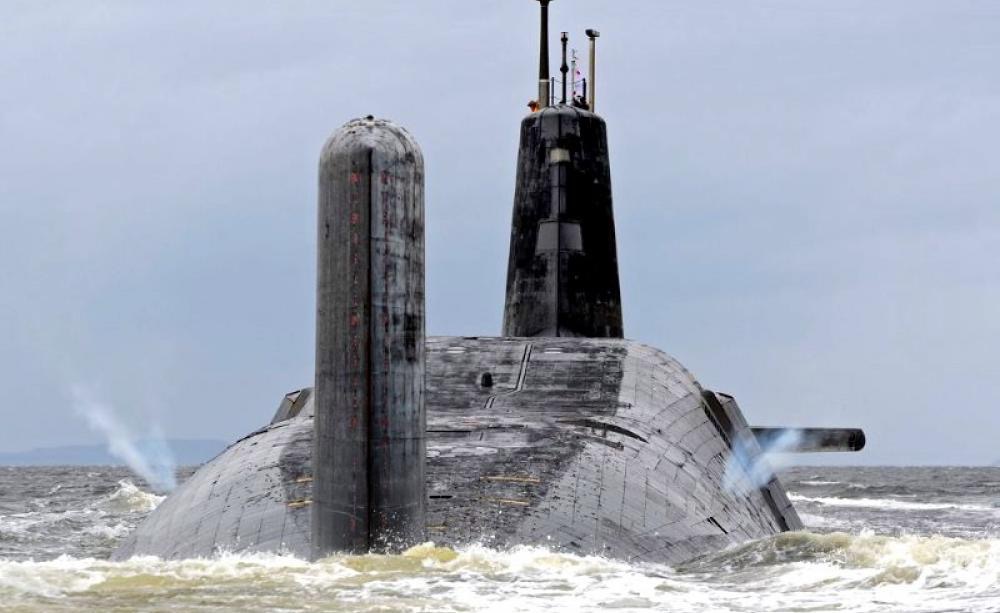
The next renewal of Britain’s nuclear deterrent will probably cost somewhere between £200bn and £300bn over the several decades of its useless life. No-one knows for sure but it will dwarf the Labour green commitment. Now is the time to give it up and someone needs to have the bravery to start the debate in earnest.
And why now? Well quite simply Britain’s possession of nuclear capability is irrelevant on the world stage. It buys us nothing – no safeguards, no deterrents, no kudos. We are finally waking up to the fact that we are not a major force in the world any more, and that Britain will never be a flashpoint where having a deterrent would make any difference. The benefits of Trident largely accrue to the US who sells it to us and makes a lot of profit from doing so, and to a small part of Scotland where the submarines dock and are maintained.
And we simply can’t afford it. Trident is a white elephant. We could do so much with the money released from it. But for some reason everyone is afraid to go there and start educating the public about what a millstone it is. An article some years ago in The Week made less than convincing arguments for its retention and if anything the case for scrapping it has got stronger. There are after all only nine nuclear capable countries in the world and only two of those – America and China – are big players economically and in terms of global political influence. For everyone else it is small scale willy waving, and Britain has to accept that it could show real leadership in the world by scrapping Trident and using the money to address urgent domestic problems. But Sunak never will, and if Starmer can’t handle Rochdale he certainly won’t be able to manage the howls from the likes of the Daily Mail about us becoming a non-nuclear power.
So I have a theory about the future of defence expenditure in the UK going forward and it goes like this. Being a nuclear power is irrelevant but having an army is still a necessary fact of life. The big issue will not be fighting domestic wars but deployment overseas where this is unavoidable and responding to emergencies, particularly climate emergencies. The army have always had a civil role in this respect so we should start seeing them as what they are, both a defence force and a corps of emergency and logistical responders who can support in case of flooding and severe weather.
So that’s my rant on Trident. After that I think I need to think about nicer things, such as the great British pub.
Steep, Bedales and the Harrow Pub
Sometimes you visit a place that is not only interesting in itself but also opens up a whole line of enquiry that takes you on a journey. So it was when my son took me to a pub outside Petersfield called The Harrow which is on a hill with a village called The Steep. This area is chiefly famous for one thing which is that it is where the famous Bedales School is located, an establishment founded on liberal principles back in the nineteenth century. It’s website actually contains the following mission statement:
A progressive, liberal education based on our communitarian ‘work of each for weal of all’ principle, that develops creative, critically-thinking life-long learners.
Now I have only known the word weal in connection with a slap on the cheek but it has a different older meaning, as set out here in the Miriam Webster online dictionary:
At one time, weal and wealth were synonyms; both meant “riches” (as in “all their worldly weal”) and “well-being.” Both words stem from wela, the Old English word for “well-being,” and are closely related to the Old English word for “well.” An unrelated word weal is a synonym of welt in its painful application.
As you can see I have already digressed, so let’s get back to the pub itself. According to the Steep History Group website (which in turn references a book dedicated to this one pub and published last year by one Fran Box) the pub dates from the early 18th Century but there was probably an inn on the site long before that and some of the existing building may have incorporated features or materials from the earlier period.
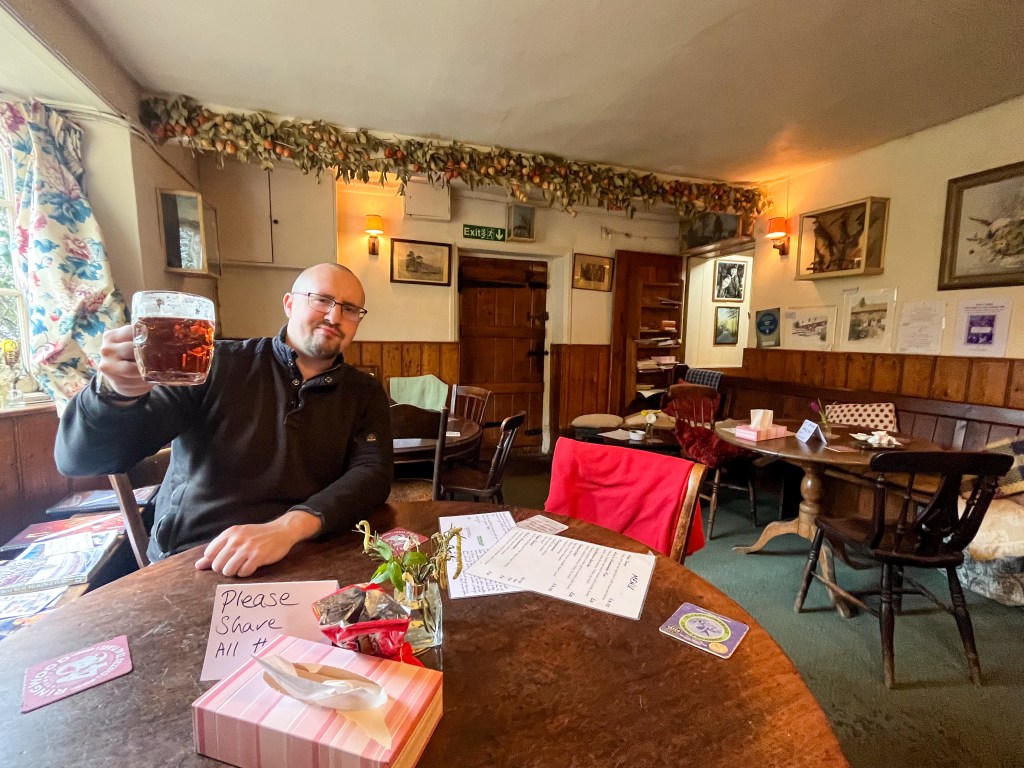
What makes The Harrow so interesting to visit today? Well first off it only takes cash or cheque and has no Wi-Fi. It is decorated in the style of my mother’s front room circa 1976 with wooden furniture, piles of magazines and for some strange reason a box of tissues on every table. There are also several examples of spooky taxidermy in glass boxes. Every seating area also has a sign on it saying “please share the tables” which is a command not a request.
The pub is run by two sisters, Claire and Nisa, who are probably contemporaries of mine in age terms, but remarkably the pub has been tenanted or owned by their family since 1932 when Annie May, their grandmother, was co-licencee with her husband. So in a few years the pub will have been in the same family for a hundred years.
The Harrow is famous for the quality of its beer. They have barrels along the back wall and a rotating selection of guest beers; I had a small Marston’s Oyster stout which was absolutely gorgeous. You can always tell when a pub keeps its beer well and this was faultless. The food is very traditional but my son’s ploughman’s lunch (which had beef as well as cheese) was by all accounts excellent.
The famous poet Edward Thomas was a celebrated writer who was born in Lambeth and moved to the Hampshire village of Steep where he turned to writing poems. Thomas and his family made the move when he and his wife Helen decided their children would be educated at Bedales School. The author lived in a red brick house in the village and drew inspiration to write his poems from the beautiful Hampshire countryside which surrounds Steep. There is a circular walk on the Visit Hampshire website which you can download and which is named in his honour and the Poetry Foundation has an excellent biography and critique of his contribution to poetry before his death at the battle of Arras in n1917.
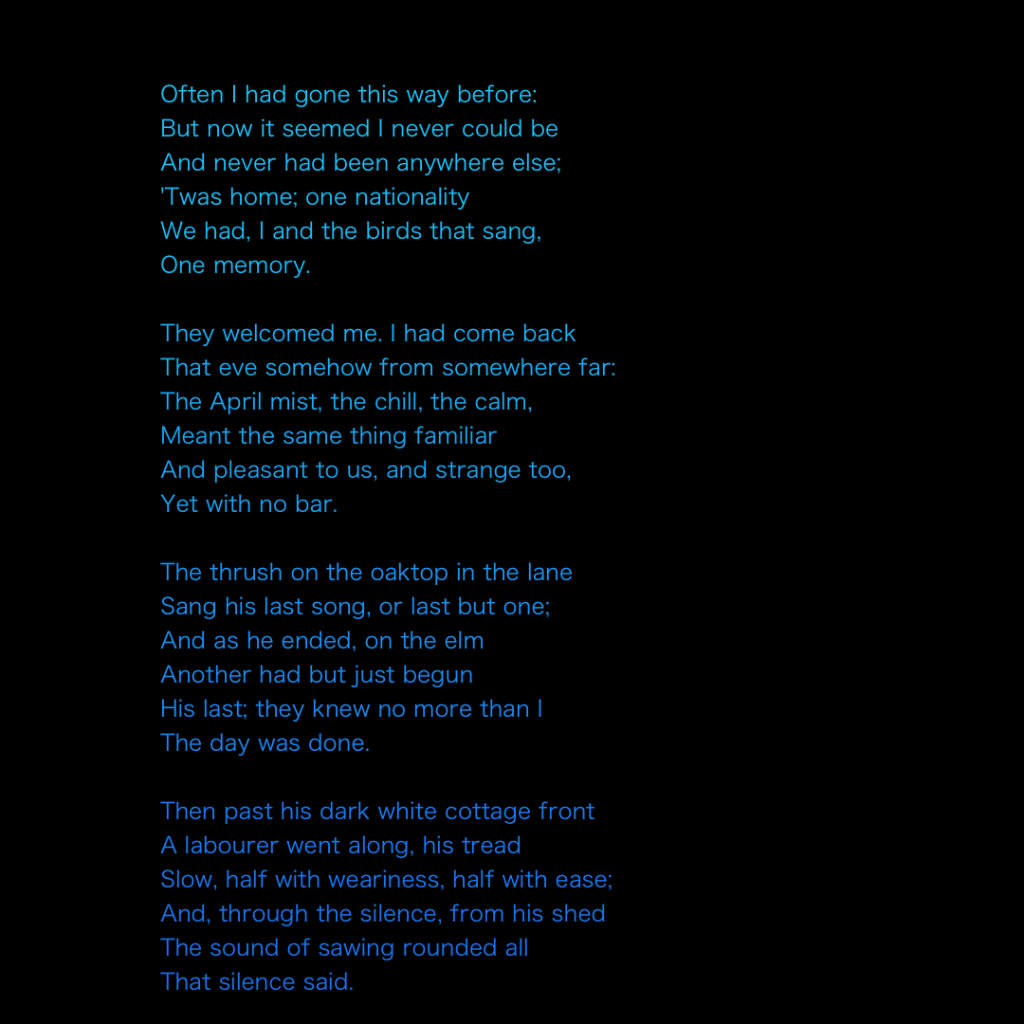
This is Thomas’s poem “Home: Often I had gone this way before” which is a fitting Eulogy to the countryside around Steep within which the Harrow and Bedales sit.
Yorkshire Folk
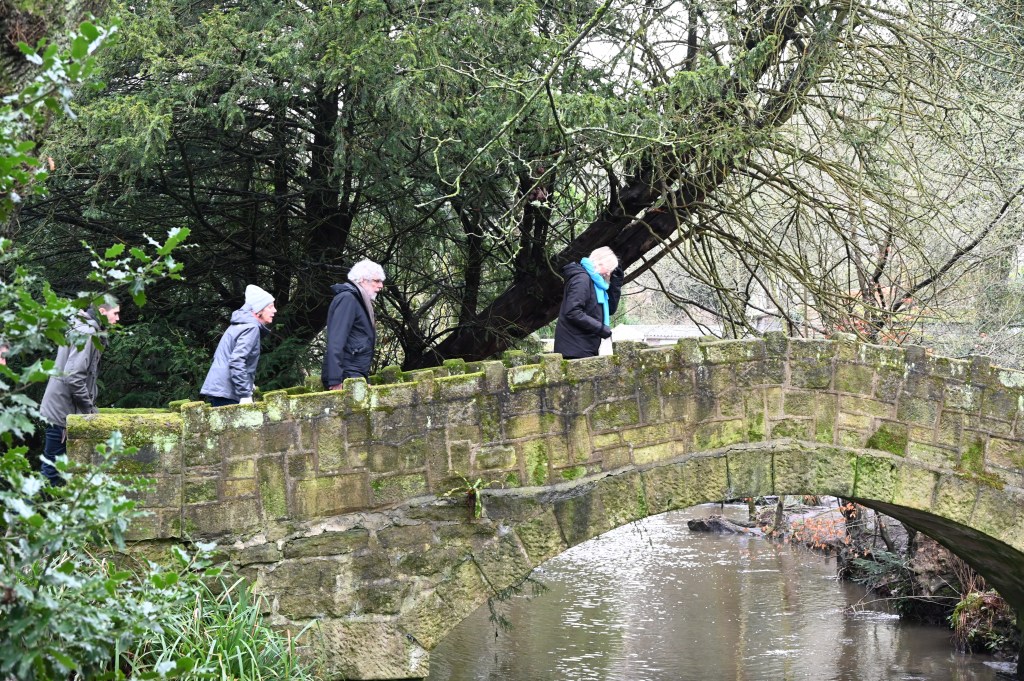
Yorkshire is another region of England steeped in history, culture, and natural beauty. From its picturesque countryside to its vibrant cities, Yorkshire offers a unique blend of old-world charm and modern sophistication. But beyond its stunning landscapes and architectural marvels, it’s the people of Yorkshire who truly make this region special. But then again they have to be special because it is colder than down south and they get a lot more weather, particularly the wet and white variety. And actually the cities are vibrant but they are also grim in places. Darlington is particularly grim. I’ve never known anyone admit to coming from there. It has one of the bleakest railway stations this side of Mordor.
I have a long association with what is undoubtedly the proudest and loudest of the English counties, and one that is often associated with iconic figures such as Freddie Truman, Michael Parkinson, the Bronte sisters and Hilda of Whitby. You may not have heard of Hilda. She was a princess, nun, nurse, founding abbess of Whitby Abbey and patron saint of Whitby. The community was proto-socialist and pre-empted The Levellers by several hundred years. All property and goods were held in common; Christian virtues were exercised, especially peace and charity. Everyone had to study the Bible and do good deeds. Actually one of my favourite Yorkshire people was Betty Boothroyd, former speaker of the House of Commons and someone who we could dearly do with in politics today. And my brother and his partner once walked into the famous Betty’s Tearooms of Ilkley just as Alan Bennett was complaining about the poor quality of the custard tarts that day. That is a quintessentially Yorkshire story about a quintessential Yorkshireman..
My connection with the county started when I was nine years old and my brother elected to attend Bingley College of Higher Education where he trained to be a teacher. Not having travelled further North than North Woolwich it was something of a shock to find myself in a land of grey houses, misty hills and strange talking people with accents that were to my ears exotic. My brother’s first house when we (my mother and I) went to visit was a terrace of tiny houses with an outside toilet and washhouse. It was the height of the swinging sixties and this area had embraced hippiedom; it was was awash with Kaftans, cannabis and self styled co-operatives selling chick peas and Indian spices. On a subsequent visit I tried to join in the vibe by persuading my mother to get me some bright orange flared trousers with a butterly patch sewn on the thigh. It was not a good look for me, but I was also reading Lord of the Rings at the time and so were most of the stoned student friends of my brother. I suspect they all self identified with Tom Bombadil whereas I wanted to be the sword wielding Aragorn. Slightly older but still below drinking age I was on one occasion smuggled into the local student pub and allowed to play the pinball machine with a shandy that was expected to last all evening.
By the time I was a student myself in London my brother had moved on from teaching and was trying to forge a career in theatre and the arts. I would hitch hike up and get press ganged into helping backstage at his productions, and was rewarded with the famous Bradford curry experience, which back in the 1970s was incredible. The city’s asian population cooked food from a tradition mainly imported from Pakistan and it was both cheap and delicious. A typical evening would involve the pub, the curry house and smoking in whatever house my brother was renting at the time and with whoever he had collected as friends and colleagues that day.
Years later I took my own children up to visit. At one point my brother was living in a place in Keighley where the famous steam train that appeared in The Railway Children ran along the bottom of his garden on its way up to Howarth. We would watch the trains go by from the slate steps leading down to the bottom of the garden. We also visited The Forbidden Corner near Darlington with our youngest back in the late nineties. This remarkable attraction (which is part mystery experience and part gothic iconography) quite literally has to be seen to be believed.
My latest visit up was an altogether different affair. I was travelling solo as my soul mate was in Australia. Me now in my mid sixties and my brother ten years older than me, we were both gentleman in the twilight zone with (in his case) grandchildren in their ‘thirties. An icon of the local arts scene himself, he continues to work on various arts projects, pulling strings and getting funding for things that matter such as his Ghost Mills and Mansion project which tells the story of the mills and garment industry in the Leeds and Bradford area.
But Yorkshire still feels like another country to me. Culturally it is very different to London and the Home Counties (why are they called that?). So I paid a visit to The Yorkshire Shop in The Corn Exchange in Leeds and had a conversation about it, and found that there is in fact such a thing as Yorkshire Day which is celebrated on 1st August.
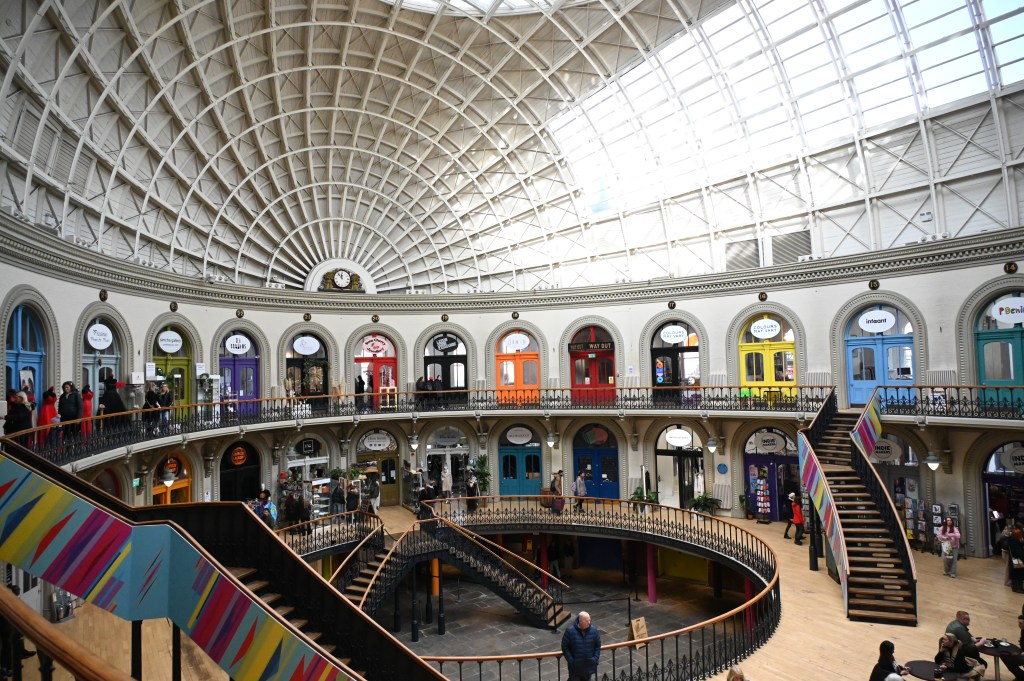
I had never heard of “Yorkshire Day” but why not? It was started back in the ‘seventies to combat the division introduced by the Local Government Act of 1974 which carved the county up into three pieces plus the city of York. It is not without controversy however:
Despite the serious underlying purpose and money-raising activities for charity, some Yorkshire people worry that it has become a media and marketing jamboree, perpetuating stereotypes of whippets, black puddings and flat caps. “We have to be careful not to overdo it, but regional distinctiveness adds colour. I’m against a grey uniformity spreading over everything, which is the way the world is going,” says Arnold Kellett from the Yorkshire Dialect Society.
Yorkshire also excels at risqué place names that celebrate every kind of sexual inclination and has a Whip-Ma-Whop-Ma-Gate, a Wetwang, a Penistone and a Butt Hole Road although this has had to be changed to something else due to the unwelcome publicity it attracted. It is now called Arsehole Lane (only kidding but it has been changed).
But what is Yorkshire really like today? A 2020 survey identified the 50 most “woke” cities in Britain and partly due to its history of inward migration Yorkshire has seven of them, with Leeds coming in highest out of the Yorkshire group coming in at number 7 nationally with York coming in 12th. Despite that it remains quite traditional outside of the cities with a relatively unchanging rural profile.
If you want a really concise summary of Yorkshire the Yorkshire Times has an excellent “in a nutshell” summary which includes a couple of useful observations, including the fact that Yorkshire would have finished 12th in the 2012 Olympic medal table if it had been an independent country, and also that it is twice the size of Wales in terms of economic clout.
TO HEAR THE PODCAST FOR THIS BLOG, WITH ADDITIONAL CONTENT AND MUSIC, GO TO SPOTIFY, APPLE, GOOGLE OR AMAZON PODCASTS AND SEARCH FOR EYECATCHING WORDS.
 Eyecatching